Love and Leverage: Should an Athlete’s Celebrity Relationship Affect Their Contract Value?

In today’s professional sports economy, player value stretches far beyond the box score. Teams routinely factor in off-field elements like branding power, media influence, and fan engagement, all forces that can generate revenue and mold a franchise’s cultural footprint. Nowhere is this more apparent than in celebrity-athlete relationships. Even online platforms are quick to recognize and take advantage of the online popularity these celeb romantic entanglements bring. As the example of Travis Kelce and Taylor Swift’s relationship continues to demonstrate: the market impact of a high-profile pairing can be immediate and measurable. 

As legal scholars have long recognized, identity itself carries market power. But as this trend grows, a new question emerges: should front offices actually weigh an athlete’s relationship status with a celebrity when determining their acquisition cost or contract value? Should their total compensation package reflect the marketing value they add with their romantic partner? Or does this blur the lines between sports performance, entertainment economics, and personal boundaries of public figures? Attempting to answer these questions requires us to take a closer look at where sports economics meets publicity rights, using real life examples, while exploring how courts already understand fame, identity, and commercial value.

The “Swift Effect” 

Travis Kelce and Taylor Swift’s relationship didn’t just dominate celebrity headlines, it signaled a new wave in the business of professional football. Swift’s first appearance at Arrowhead Stadium in September 2023 triggered a viewership surge unlike anything the league had seen. In the days following that game, the NFL posted about Swift 34 times across its social channels, generating 170 million impressions, while Kelce’s jersey sales skyrocketed 400% and the Chiefs added over 200,000 new Instagram followers (and counting). What initially looked like a cultural crossover moment quickly became an economic engine.

The impact reverberated across fan demographics. Female viewership (especially among 18 to 24 year-olds) jumped dramatically, helping push Super Bowl LVIII to a record 123.7 million average viewers, fueled by a 24% spike in young women tuning in. Over the year, more than four million new female fans entered the NFL market, with an estimated 3.4 million joining Chiefs Kingdom alone. Chiefs owner Clark Hunt later confirmed the shift: the team’s fan base, once evenly split, now skews 57% female, a change he directly attributes in part to Swift’s presence.

But what’s fascinating from a legal lens is how closely this real-world moment mirrors how courts talk about fame. American case law has long acknowledged that public figures carry commercial value simply by being who they are. In Haelan Laboratories v. Topps, the Second Circuit coined the “right of publicity,” recognizing a person’s identity as a monetizable asset. In today’s example: Swift doesn’t just bring market attention, she expanded the economic value of Kelce’s identity, making the Chiefs more valuable as a brand. And let’s not forget when she gave Kelce a cameo on her record-breaking Era’s Tour, adding even more buzz around the tight end’s name. It’s the exact kind of commercial effect the law already takes seriously.


So what does all this data tell us? While the star-impact of Swift is solely responsible for the Chiefs increased cultural and economic footprint, none of that would exist without her relationship to Kelce. Does this justify valuing Kelce differently in contract negotiations or trade considerations? Is his relationship status part of his “brand” or commercial identity just as his stats are?

The Rise of the “Social Value” Metric

While celebrity relationships can supercharge visibility, the underlying trend they highlight is much broader: player value today increasingly hinges on social value: a measurable combination of marketability, audience reach, and cultural influence. Front offices across major sports already factor in off-field metrics when evaluating players, from jersey sales and endorsement potential, to social media followings. In many ways, the modern athlete functions not only as a performer on the field, but also as a content generator and brand ambassador whose visibility can meaningfully shift a team’s revenue streams.

This evolution mirrors the name image likeness (NIL) marketplace that has reshaped college athletics. At the collegiate level, brand value is often as decisive as on-field talent: athletes at high-profile programs, or those with massive online followings, routinely secure lucrative deals even before going pro. Cases like O’Bannon v. NCAA and Alston established what the NCAA resisted for decades: that athletes don’t just produce wins, they produce value. They bring in viewers, marketing opportunities, and they drive revenue in ways that transcend play-calling and stat sheets. The logic is straightforward: audience attention translates to commercial worth.

This framework translates seamlessly into professional sports. Under these principles, a celebrity partner becomes an extension of an athlete’s brand infrastructure. Their combined platforms can amplify visibility beyond traditional sports audiences, turning athletes into crossover figures who occupy cultural spaces far removed from their sport. A player’s social media following, endorsement profile, or crossover appeal can boost a team’s national visibility or open new global markets. It’s not hypothetical. Teams measure this, agents negotiate it, and brands pay for it.

But this shift also raises an important practical dilemma: if teams increasingly consider social value in roster decisions, where is the line between evaluating a player as a commercial asset and respecting boundaries around personal identity and private relationships? The growing influence of off-field marketability suggests that the future of athlete valuation will be shaped not only by performance analytics, but also by cultural fluency. This trend is consistent with past court decisions regarding the right of publicity and the true value the holder of that right has in the case of celebrities. 

The Power-Couple Premium

Kelce and Swift may be the headline act, but they are far from the only pairing showing how quickly an athlete’s public life can spill into a team’s market calculus. Take Klay Thompson and Megan Thee Stallion. On paper, the NBA and hip-hop worlds have always overlapped, but seeing a high-caliber athlete enter that level of mainstream pop culture creates a whole new kind of crossover. With a celeb like Megan Thee Stallion in floor seats at a Dallas Mavericks game, fans of the Grammy-award winner are bound to tune in or perhaps pay more for premium seating for a chance to get a first-hand view of the star. And let’s not forget the reciprocity of the celebrity-athlete partnership: only a few months after making their relationship public, the singer scored a new sponsorship deal with Fanatics Sportsbook – an official sponsor of the NBA.

The same dynamic is found in the relationship between Stefon Diggs and Cardi B. Her presence alone brings a massive online audience. A single game appearance or Instagram post becomes a multi-media event, and within hours you see it reflected everywhere from jersey sales, to internet hashtags. It’s the kind of cultural bleed-over front offices pretend not to notice, even though the revenue streams speak for themselves. It’s not that these players become “more valuable” overnight in a traditional sense, but their teams undeniably get swept into a bigger cultural orbit.

From a legal standpoint, that visibility is not just “noise.” It’s part of the commercial persona that courts protect under the right of publicity. In her lawsuit against Samsung, Vanna White prevailed on her argument based on California’s statutory right of publicity. The Ninth Circuit reasoned that a person’s NIL or commercial identity extended to the broader concept of one’s identity. The court held that Samsung violated the statute even without using her name or image, but because it used the idea of her. This case underscores the courts’ recognition that association itself creates commercial value. Something that professional sports leagues are already aware of as demonstrated by years of lucrative brand-deals and partnerships

Trouble in Paradise: Risks of Monetizing Personal Relationships 

Once you start looking closely at the way these relationships shape fan interest and team economics, it becomes hard to ignore a slightly uncomfortable truth: that there’s a fine line between recognizing and rewarding marketability, and commodifying someone’s personal life. Courts have made clear that a person owns the commercial value of their identity. But what about the commercial value of a relationship? What about their romantic partner’s identity? And what happens when teams start using those dynamics to justify contract decisions?

On one hand, it’s easy to see why teams are tempted to lean in. When an athlete’s significant other can open the door to new audiences or bring an entirely different demographic into the market, that’s real, tangible value. It can mean higher ticket demand, more national airtime, stronger sponsorship interest. In a business as competitive as professional sports, where front offices are constantly searching for any kind of edge, ignoring that kind of upside feels naïve in today’s golden age of social media.

On the flip side, when a player’s personal relationship begins to encroach on contract conversations, suddenly it’s not only about his performance on the field, but also off the field. Front offices now run the risk of causing contractual provisions or other incentives to be based on how much of the player’s private life he’s willing to have consumed by the public. It creates a market-based precedent where a romantic partner isn’t just a companion. That “companion” becomes part of a player’s “brand portfolio” whether or not they want that designation. 

And the even bigger risk at the end of this slippery slope? The potential legal consequences teams could face in a cause of action by a celebrity who discovers another party is profiting off of her NIL without first obtaining that celeb’s consent. Or one who finds her commercial identity being used as a bargaining chip in player compensation or trade negotiations. 

Legal Stakes in Love 

Think about it this way: if there was any evidence of a contract provision between a team and a player, that implicitly or explicitly stated that the player may be compensated for the impact/result of another person’s (celebrity’s) presence, and that person was not a party to the agreement, and thus did not consent to the monetization of her persona…a court could easily recognize an action for appropriation of name or likeness. On the other hand, could the commoditization of a player’s personal relationship be taken as pressure on the athlete from the team to exploit their private lives for value? It seems this risk could move a team dangerously close to the line of unwanted commercial exploitation.

The Price of Love and the Future of Player Valuation 

Aaron Rodgers says he “didn’t do myself any favors” dating famous women

As fun as it is to watch sports and pop culture collide, it’s hard not to wonder where this all could lead, especially from a legal standpoint. If romantic relationships can dramatically shape revenue, influence fan bases, and transform a player’s commercial identity…how long before they quietly shape front-office decisions too? Should they? Where should the legal and ethical boundaries sit between commercial identity, intellectual property, and fair contracting? In a modern sports landscape where we’ve been witness to how a romantic relationship can redefine a franchise’s reach, the real question is no longer whether off-field identity carries monetary value, but how far we’re willing to let that value shape the way athletes are analyzed, compensated, and ultimately valued. 

Fame, Free Speech, and Fantasy: Why It’s Time for Federal Action

The rise of fantasy sports has transformed how fans engage with professional athletics, blurring the boundaries between data, identity, and commerce. But, while online fantasy sports platforms continue to evolve into a mature, multi-billion-dollar industry, the balance between the publicity rights of the professional athletes featured on those mediums, and the First Amendment rights of the online intermediaries is still on delicate footing. 

As these platforms continue to advance, they expose a fundamental tension in our legal system: the fragmented and inconsistent nature of publicity rights across states. Professional athletes argue that the unlicensed or unapproved use of their names and statistics constitutes a commercial exploitation of their identities, while fantasy sports enterprises contend that such data are publicly available facts protected by the First Amendment. This unresolved conflict underscores the urgent need for a federal right of publicity statute…one that harmonizes legal standards, reduces costly litigation, and provides a coherent framework for balancing economic innovation with individual rights in the digital era.

What is the Right of Publicity?

The right of publicity protects against unauthorized commercial use of someone’s name, image, or likeness. Most states have a publicity rights statute, however a statute is not a prerequisite to enforce one’s right of publicity. Many courts arrive at the same outcome using state common law.

In New York, the state’s publicity rights statute was interpreted by the court in Stephano v. News Group Publications, Inc.. In this case, the plaintiff was a fashion model who brought suit against the defendant, a photographer, who used his picture for commercial advertising purposes without the plaintiff’s consent, thus violating his statutory right of publicity. Here, the New York Court of Appeals ruled in favor of the plaintiff.

Moreover, the court reasoned that the statute is not limited to situations where the defendant’s conduct has caused distress or harm to a person who wishes to lead a “private life free of all commercial publicity.” Rather, the court held that by its plain language, the statute applies to any use of any person’s image for commercial purposes whenever the defendant has not obtained the person’s written consent to do so. It follows from this decision that, regardless of a person’s publicity status (i.e., a professional athlete v. your average Joe), he is covered under the statute.

What’s in a Name?  

So — what does the court’s decision in Stephano have to do with the world of online fantasy sports and professional athletes? Well, athletes argue that the use of their names, images, and stats constitutes a commercial appropriation of their identities, allowing private companies to profit from their identities without consent or compensation. On the other hand, fantasy sports platforms maintain that players’ statistical data are publicly available facts, not proprietary information, and thus their use is protected under the First Amendment. This disagreement has placed courts in a difficult position, as fantasy sports platforms do not fit neatly into either category of commercial exploitation or pure free speech.

Conflict in the Courts

The unpredictable nature of the right of publicity is best illustrated through the inconsistent outcomes in key cases involving fantasy sports platforms. In C.B.C. Distribution & Marketing, Inc. v. Major League Baseball Advanced Media, the Eighth Circuit confronted whether the use of player names and statistics in fantasy baseball products violated players’ rights of publicity. While acknowledging that a violation technically existed, the court held that the First Amendment interests in disseminating factual data outweighed those rights.

The District of Minnesota reached a similar conclusion in CBS Interactive v. NFL Players’ Association, extending the Eighth Circuit’s reasoning to fantasy football and reaffirming that the publication of player statistics equates constitutionally protected expression. Conversely, in Gridiron.com, Inc. v. NFL, the court took the opposite approach, rejecting the First Amendment defense and finding that the online platform’s use of player images and information constituted commercial exploitation in violation of the NFL Players Association’s exclusive licensing rights.

High Stakes Moving Forward

The latest test of this legal imbalance is now before the U.S. District Court for the Eastern District of Pennsylvania, in the case of MLB Players Inc. v. DraftKings & Bet365. In its complaint, MLB Players, Inc. (the MLB’s Player Association group licensing subsidiary) alleges the online fantasy/gambling platforms of misappropriating the images and likenesses of numerous MLB players on their online and mobile platforms. Plaintiff emphasizes it was not suing “to protect MLB players’ personal privacy interest, but rather the commercial value of their NIL rights.” Still pending in federal court, the court’s ruling here could seta new precedent after 71 years of sports-related litigation arguing over professional athlete’s publicity rights.

Without a federal publicity rights statute and a lack of uniformity across jurisdictions, the ultimate burden falls onto the litigants. The troubling fact is that identical conduct may be lawful in one jurisdiction and unlawful in another. The end result? A legal patchwork that breeds uncertainty, invites forum shopping, and imposes significant litigation costs on all parties involved.

I Knew I Smelled a Rat! How Derivative Works on Social Media can “Cook Up” Infringement Lawsuits


If you have spent more than 60 seconds scrolling on social media, you have undoubtably been exposed to short clips or “reels” that often reference different pop culture elements that may be protected intellectual property. While seemingly harmless, it is possible that the clips you see on various platforms are infringing on another’s copyrighted work. Oh Rats!

What Does Copyright Law Tell Us?

Copyright protection, which is codified in 17 U.S.C. §102, extends to “original works of authorship fixed in any tangible medium of expression”. It refers to your right, as the original creator, to make copies of, control, and reproduce your own original content. This applies to any created work that is reduced to a tangible medium. Some examples of copyrightable material include, but are not limited to, literary works, musical works, dramatic works, motion pictures, and sound recordings.

Additionally, one of the rights associated with a copyright holder is the right to make derivative works from your original work. Codified in 17 U.S.C. §101, a derivative work is “a work based upon one or more preexisting works, such as a translation, musical arrangement, dramatization, fictionalization, motion picture version, sound recording, art reproduction, abridgment, condensation, or any other form in which a work may be recast, transformed, or adapted. A work consisting of editorial revisions, annotations, elaborations, or other modifications which, as a whole, represent an original work of authorship, is a ‘derivative work’.” This means that the copyright owner of the original work also reserves the right to make derivative works. Therefore, the owner of the copyright to the original work may bring a lawsuit against someone who creates a derivative work without permission.

Derivative Works: A Recipe for Disaster!

The issue of regulating derivative works has only intensified with the growth of cyberspace and “fandoms”. A fandom is a community or subculture of fans that’s built itself up around one specific piece of pop culture and who share a mutual bond over their enthusiasm for the source material. Fandoms can also be composed of fans that actively participate and engage with the source material through creative works, which is made easier by social media. Historically, fan works have been deemed legal under the fair use doctrine, which states that some copyrighted material can be used without legal permission for the purposes of scholarship, education, parody, or news reporting, so long as the copyrighted work is only being used to the extent necessary. Fair use can also apply to a derivative work that significantly transforms the original copyrighted work, adding a new expression, meaning, or message to the original work. So, that means that “anyone can cook”, right? …Well, not exactly! The new, derivative work cannot have an economic impact on the original copyright holder. I.e., profits cannot be “diverted to the person making the derivative work”, when the revenue could or should have gone to original copyright holder.

With the increased use of “sharing” platforms, such as TikTok, Instagram, or YouTube, it has become increasingly easier to share or distribute intellectual property via monetized accounts. Specifically, due to the large amount of content that is being consumed daily on TikTok, its users are incentivized with the ability to go “viral” instantaneity, if not overnight,  as well the ability to earn money through the platform’s “Creator Fund.” The Creator Fund is paid for by the TikTok ads program, and it allows creators to get paid based on the amount of views they receive. This creates a problem because now that users are getting paid for their posts, the line is blurred between what is fair use and what is a violation of copyright law. The Copyright Act fails to address the monetization of social media accounts and how that fits neatly into a fair use analysis.

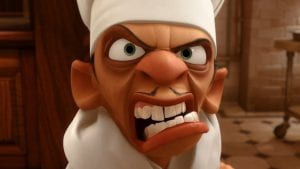
Ratatouille the Musical: Anyone Can Cook?

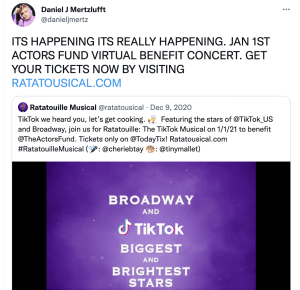
Back in 2020, TikTok users Blake Rouse and Emily Jacobson were the first of many to release songs based on Disney-Pixar’s 2007 film, Ratatouille. What started out as a fun trend for users to participate in, turned into a full-fledged viral project and eventual tangible creation. Big name Broadway stars including André De Shields, Wayne Brady, Adam Lambert, Mary Testa, Kevin Chamberlin, Priscilla Lopez, and Tituss Burgess all participated in the trend, and on December 9, 2020, it was announced that Ratatouille was coming to Broadway via a virtual benefit concert.

Premiered as a one-night livestream event in January 1 2021, all profits generated from the event were donated to the Entertainment Community Fund (formerly the Actors Fund), which is a non-profit organization that supports performers and workers in the arts and entertainment industry. It initially streamed in over 138 countries and raised over $1.5 million for the charity. Due to its success, an encore production was streamed on TikTok 10 days later, which raised an additional $500,000 for the fund (totaling $2 million). While this is unarguably a derivative work, the question of fair use was not addressed here because Disney lawyers were smart enough not to sue. In fact, they embraced the Ratatouille musical by releasing a statement to the Verge magazine:
Although we do not have development plans for the title, we love when our fans engage with Disney stories. We applaud and thank all of the online theatre makers for helping to benefit The Actors Fund in this unprecedented time of need.

Normally, Disney is EXTREMELY strict and protective over their intellectual property. However, this small change of heart has now opened a door for other TikTok creators and fandom members to create unauthorized derivative works based on others’ copyrighted material.

Too Many Cooks in the Kitchen!

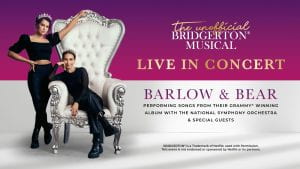
Take the “Unofficial Bridgerton Musical”, for example. In July of 2022, Netflix sued content creators Abigail Barlow and Emily Bear for their unauthorized use of Netflix’s original series, Bridgerton. The Bridgerton Series on Netflix is based on the Bridgerton book series by Julia Quinn. Back in 2020, Barlow and Bear began writing and uploading songs based on the Bridgerton series to TikTok for fun. Needless to say, the videos went viral, thus prompting Barlow and Bear to release an entire musical soundtrack based on Bridgerton. They even went so far as to win the 2022 Grammy Award for Best Musical Album.

On July 26, Barlow and Bear staged a sold-out performance with tickets ranging from $29-$149 at the New York Kennedy Center, and also incorporated merchandise for sale that included the “Bridgerton” trademark. Netflix then sued, demanding an end to these for-profit performances. Interestingly enough, Netflix was allegedly initially on board with Barlow and Bear’s project. However, although Barlow and Bear’s conduct began on social media, the complaint alleges they “stretched fanfiction way past its breaking point”. According to the complaint, Netflix “offered Barlow & Bear a license that would allow them to proceed with their scheduled live performances at the Kennedy Center and Royal Albert Hall, continue distributing their album, and perform their Bridgerton-inspired songs live as part of larger programs going forward,” which Barlow and Bear refused. Netflix also alleged that the musical interfered with its own derivative work, the “Bridgerton Experience,” an in-person pop-up event that has been offered in several cities.

Unlike the Ratatouille: The Musical, which was created to raise money for a non-profit organization that benefited actors during the COVID-19 pandemic, the Unofficial Bridgerton Musical helped line the pockets of its creators, Barlow and Bear, in an effort to build an international brand for themselves. Netflix ended up privately settling the lawsuit in September of 2022.

Has the Aftermath Left a Bad Taste in IP Holder’s Mouths?

The stage has been set, and courts have yet to determine exactly how fan-made derivative works play out in a fair use analysis. New technologies only exacerbate this issue with the monetization of social media accounts and “viral” trends. At a certain point, no matter how much you want to root for the “little guy”, you have to admit when they’ve gone too far. Average “fan art” does not go so far as to derive significant profits off the original work and it is very rare that a large company will take legal action against a small content creator unless the infringement is so blatant and explicit, there is no other choice. IP law exists to protect and enforce the rights of the creators and owners that have worked hard to secure their rights. Allowing content creators to infringe in the name of “fair use” poses a dangerous threat to intellectual property law and those it serves to protect.


DANCE DANCE LITIGATION

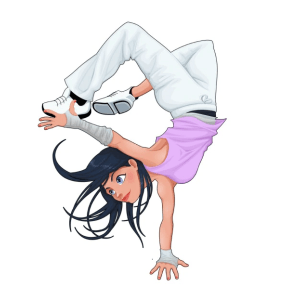
When the tune of the “Y.M.C.A.,” by The Village People starts to play, no matter the time or place, the urge to raise your arms and dance is impossible to ignore. A wave of nostalgia and childish-like happiness quickly fills the atmosphere, and as the chorus begins, you and (almost) everyone around you begin to dance the only way you know how: throwing your arms up in the air and forming the letters, duh!  But what’s not so obvious is that the “Y.M.C.A.” dance, irrespective of its wild popularity and incorporation into major television and film productions since its release in 1978, is not copyrighted. The songwriters, artists, and producers each have and continue to receive the recognition, compensation, and title they deserve for their contributions to the song itself, but the inherent choreography remains unprotected. According to the Copyright Office (“the Office”), a dance “whereby a group of people spell out letters with their arms” is simply too basic to deserve copyright recognition because no matter how distinctive it may be, it is nonetheless a commonplace movement or gesture.

CONGRESS ‘GETS DOWN’

Choreographers, since the beginning of the entertainment industry, have never received the legal protections that producers, songwriters, and artists have. Although The Copyright Act of 1976 (the “Act”) officially recognizes choreography as a protected form of creative expression, in order to qualify as copyrightable, the choreographic work must conform to the following elements: (1) it is an original work of authorship, (2) it is an expression as opposed to an idea, and (3) it is “fixed in any tangible medium of expression. In addition, the Supreme Court has held that an individual may not bring a copyright infringement suit under the Act until the individual has registered with the Office. Although choreographic works were finally recognized as worthy or deserving of copyright recognition and status, the application of copyright laws to choreography since its recognition has revealed a significant grey area for intellectual property law.
BUT IS IT JUST A SHIMMY OR A  ‘CHOREOGRAPHIC WORK’?

When assessing what qualifies as a copyrightable choreographic work, the Office acknowledges that the dividing line between what is a simple routine and what is copyrightable choreography is more of a continuum, rather than a bright line. The Office also indicated certain types of works that, from the outright, may not be copyrighted: common place movements, individual dance moves or gestures, social dances, ordinary and athletic movements, and short dance routines.

Whether a particular dance qualifies as a choreographic work, or not, ultimately rests on the Office’s assessment of the following elements collectively:

(1) rhythmic movement in a defined space

(2) compositional arrangement

(3) musical or textual accompaniment

(4) dramatic content

(5) presentation before an audience

(6) execution by skilled performers

DANCING OUR WAY TO THE COURT HOUSE 

Litigation surrounding the video game Fortnitereleased through Epic Games Inc., reveals just how large that grey area has grown to be. Although free to play, Fortnite’s revenue is derived from in-game purchases including purchasing a dance emote or a dance routine for the player’s avatar.

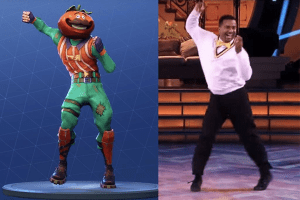
In 2019, Alfonso Ribeiro, who played the character ‘Carlton Banks’ on the TV show The Fresh Prince of Bel-Air, sought justice for Epic Games’ improper use of the Carlton as a dance emote in Fortnite but was both dismissed and rejected by the court and the Office. Following the direction of the Supreme Court, the court dismissed Mr. Ribeiro’s claim for failing to register and receive final registration of his claim with the Copyright Office. Registration is deemed to be “made” only when “the Register has registered a copyright after examining a properly filed application.” In an attempt to salvage his claim, Mr. Ribeiro proceeded to the Office but nonetheless left emptied handed. In reviewing the application, the Office refused to grant Mr. Ribeiro a copyright because the Carlton did not rise to the level of choreography since it was a simple routine made up of just three dance steps. Likewise, cases brought by rapper 2 Milly and the Backpack Kid against Epic Games alleging copyright infringement for their choreographic works the “Milly Rock,” and “the Floss” as an emote in Fortnite were also dismissed for failure to register with the Office.
So, since the cases were all dismissed for not having a valid registration with the Office, then having a valid registration with the Office is the golden ticket to defending your claim of improper infringement, right? Not quite.

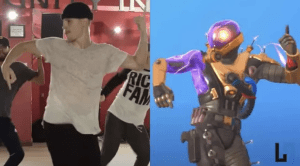
Earlier this year in March, professional dance choreographer Kyle Hanagami (“Hanagami”) filed suit against Epic Games for using dance movements from the copyrighted routine used for the song “How Long” from Charlie Puth. Hanagami, unlike his predecessors above, secured a copyright for his choreographic work. Holding that golden ticket, Hanagami argued that Epic Games did not credit or seek his consent to use, display, reproduce, sell or create derivative work based on his registered choreography.
Regardless of the fact that Hanagami did secure his copyright before bringing a claim under the Act, the court yet again dismissed the case and agreed with Epic Games. The court stated that Hanagami’s steps are potentially protected only when combined with the other elements that make up his copyrighted work. Epic Games technically didn’t infringe on Hanagami’s copyright because the specific dance steps on their own were not entitled to copyright protection. When the works were evaluated as a whole, the court decided they were not substantially similar: “[w]hereas Hanagami’s video features human performers in a dance studio in the physical world performing for a YouTube audience, Epic Games’ work features animated characters performing for an in-game audience in a virtual world.”

And as if the grey couldn’t get any grey-er….it indeed does.

DANCING IN CIRCLES, YET AGAIN

The outcome of all this dance-litigation eludes to the central need for choreography, on its own, to be recognized and protected as a separate work. Although securing a copyright to a choreographic work will get you in the door to the courthouse, there’s no guarantee that what you’ve copyrighted will actually be protected. Thus, it is crucial that the plight of choreographers be truly recognized. Inconsistent outcomes and unclear guidelines continue to aggravate the underlying issue of allowing choreographers to pursue the copyright protection they deserve for their works.  Copyrighting successful dance routines is to further help ensure dancers’ and their ability to monetize and profit from their work, but the murky waters that prevent registration and the unpredictability of outcomes in court will remain as barriers until we can clear the grey area.

The #Trademarkability of #Hashtags

The #hashtag is an important marketing tool that has revolutionized how companies conduct business. Essentially, hashtags serve to identify or facilitate a search for a keyword or topic of interest by typing a pound sign (#) along with a word or phrase (e.g., #OOTD or #Kony2012). Placing a hashtag at the beginning of a word or phrase on Twitter, Instagram, Facebook, TikTok, etc., turns the word or phrase into a hyperlink attaching it to other related posts, thus driving traffic to users’ sites. This is a great way to promote a product, service or campaign while simultaneously reducing marketing costs and increasing brand loyalty, customer engagement, and, of course, sales. But with the rise of this digital “sharing” tool comes a new wave of intellectual property challenges. Over the years, there has been increasing interest in including the hashtag in trademark applications.

#ToRegisterOrNotToRegister

According to the United States Patent and Trademark Office (USPTO), a term containing the hash symbol or the word “hashtag” MAY be registered as a trademark. The USPTO recognizes hashtags as registrable trademarks “only if [the mark] functions as an identifier of the source of the applicant’s goods or services.” Additionally, Section 1202.18 of the Trademark Manual of Examining Procedure (TMEP) further explains that “when examining a proposed mark containing the hash symbol, careful consideration should be given to the overall context of the mark, the placement of the hash symbol in the mark, the identified goods and services, and the specimen of use, if available. If the hash symbol immediately precedes numbers in a mark, or is used merely as the pound or number symbol in a mark, such marks should not necessarily be construed as hashtag marks. This determination should be made on a case-by-case basis.”

Like other forms of trademarks, one would seek registration of a hashtag in order to exclude others from using the mark when selling or offering the goods or services listed in the registration. More importantly, the existence of the trademark would serve in protecting against consumer confusion. This is the same standard that is applied to other words, phrases, or symbols that are seeking trademark registration. The threshold question when considering whether to file a trademark application for a hashtag is whether the hashtag is a source identifier for goods or services, or whether it merely describes a particular topic, movement, or idea.

#BarsToRegistration

Merely affixing a hashtag to a mark does not automatically make it registerable. For example, in 2019, the Trademark Trial and Appeal Board (TTAB) denied trademark registration for #MAGICNUMBER108 because it did not function as a trademark for shirts and is therefore not a source identifier. Rather, the TTAB found that the social media evidence suggests that the public sees the hashtag as a “widely used message to convey information about the Chicago Cubs baseball team”, namely, their 2016 World Series win after a 108-year drought.  The TTAB went on to say that just because the mark is unique doesn’t mean that the public would perceive it is an indication of a source. This further demonstrates the importance of a goods- source association of the mark.

Hashtags that would not function as trademarks are those simply relating to certain topics that are not associated with any goods or services. So, for example, cooking: #dinnersfortwo, #mealprep, or #healthylunches. These hashtags would likely be searched by users to find information relating to cooking or recipe ideas. When encountering these hashtags on social media, users would probably not link them to a specific brand or product. On the contrary, hashtags like #TheSaladLab or #ChefCuso would likely be linked to specific social media influencers who use that mark in connection with their goods and services and as such, could function as a trademark. Other examples of hashtags that would likely function as trademarks are brands themselves (#sephora, #prada, or #nike). Even slogans for popular brands would suffice (#justdoit, #americarunsondunkin, or #snapcracklepop).

#Infringement

What makes trademarked hashtags unique from other forms of trademarked material is that hashtags actually serve a purpose other than just identifying the source of the goods- they are used to index key words on social media to allow users to follow topics they are interested in. So, does that mean that using a trademarked hashtag in your social media post will create a cause of action for trademark infringement? The answer to this question is every lawyer’s favorite response: it depends. Sticking with the example above, assuming #TheSaladLab is a registered trademark, referencing the tag in this blog post alone would likely not warrant a trademark infringement claim, but if I were to sell kitchen tools or recipe books with the tag #TheSaladLab, that might rise to the level of infringement. However, courts are still unclear about the enforceability of hashtagged marks. In 2013, a Mississippi District Court stated in an order that “hashtagging a competitor’s name or product in social media posts could, in certain circumstances, deceive consumers.” The court never actually made a ruling on whether the use of the hashtag was actually infringing the registered mark.

This is problematic because on one hand, regardless of whether there is a hashtag in front of the mark, the owner of a registered trademark is entitled to bring a cause of action for trademark infringement when someone else uses their mark in commerce without their permission in the same industry. On the other hand, when one uses a trademark with the “#” symbol in front of it for the purposes of sharing information on social media, they are simply complying with the norms of the internet. The goal is to strike a balance between protecting the rights of IP owners and also protecting the rights of users’ freedom of expression on social media.

While the courts are somewhat behind in dealing with infringement relating to hashtagged trademark material, for the time being, various social media platforms (Instagram, Facebook, Twitter, YouTube) have procedures in place that allow users to report misuse of trademark-protected material or other intellectual property-related concerns.

Skip to toolbar