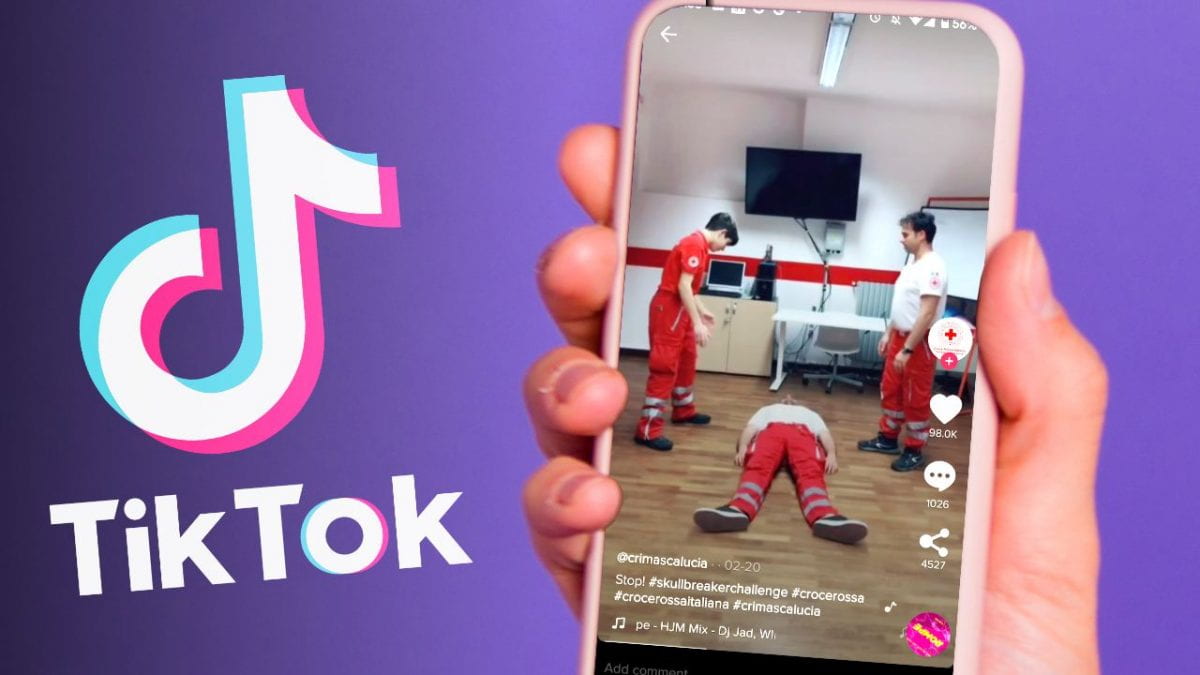
The Dark Side of Tik-Tok

In Bethany, Oklahoma, a 12-year-old child died due to strangulation marks on his neck. According to police, this wasn’t due to murder or suicide, rather a TikTok challenge that had gone horribly wrong. The challenge is known by a variety of names, including Blackout Challenge, Pass Out Challenge, Speed Dreaming, and The Fainting Game. The challenge is kids asphyxiating themselves, either by choking themselves out by hand or by using a rope or a belt, to obtain the euphoria when they wake up.

Even if the challenge does not result in death, medical professionals warn that it is extremely dangerous. Every moment you are without oxygen or blood, you risk irreversible damage to a portion of your brain.

Unfortunately, the main goal on social media is to gain as many views as possible, regardless of the danger or expense.

Because of the pandemic kids have been spending a lot of time alone and bored, which has led to preteens participating in social media challenges.

There are some social media challenges that are harmless including the 2014 Ice Bucket Challenge, which earned millions of dollars for ALS research.

However there has also been the Benadryl challenge which began in 2020 that urged people to overdose on the drug in an effort to hallucinate. People were also urged to lick surfaces in public as part of the coronavirus challenge.

One of the latest “challenges” on the social media app TikTok could have embarrassing consequences users never imagined possible. The idea of the Silhouette Challenge is to shoot a video of yourself dancing as a silhouette with a red filter covering up the details of your body. It started out as a way to empower people but has turned into a trend that could come back to haunt you. Participants generally start the video in front of the camera fully clothed. When the music changes, the user appears in less clothing, or nude, as a silhouette obscured by a red filter. But the challenge has been hijacked by people using software to remove that filter and reveal the original footage.

If these filters are removed, that can certainly create an environment where kids’ faces are being put out in the public domain, and their bodies are being shown in ways they didn’t anticipate,” said Mekel Harris licensed pediatric & family psychologist. Young people who participate in these types of challenges aren’t thinking about the long-term consequences.

These challenges reveal a darker aspect to the app, which promotes itself as a teen-friendly destination for viral memes and dancing.

TikTok said it would remove such content from its platform. In an updated post to its newsroom, TikTok said:

“We do not allow content that encourages or replicates dangerous challenges that might lead to injury. In fact, it’s a violation of our community guidelines and we will continue to remove this type of content from our platform. Nobody wants their friends or family to get hurt filming a video or trying a stunt. It’s not funny – and since we remove that sort of content, it certainly won’t make you TikTok famous.”

TikTok urged users to report videos containing the challenge. And it told BBC News there was now text reminding users to not imitate or encourage public participation in dangerous stunts and risky behavior that could lead to serious injury or death.

While the challenge may seem funny or get views on social media platforms, they can have long-lasting health consequences.

Because the First Amendment gives strong protection to freedom of speech, only publishers and authors are liable for content shared online. Section 230(c)(1) of the Communications Decency Act of 1996 states that “no provider or user of an interactive computer service shall be treated as the publisher or any information provided by another information content provider.” This act provides social media companies immunity over the content published by other authors on their platforms as long as intellectual property rights are not infringed. Although the law does not require social media sites to regulate their content, they can still decide to remove content at their discretion. Guidelines on the laws regarding discretionary content censorship are sparse. Because the government is not regulating speech, this power has fallen into the hands of social media giants like TikTok. Inevitably, the personal agendas of these companies are shaping conversations, highlighting the necessity of debating the place of social media platforms in the national media landscape.

THE ROLE OF SOCIAL MEDIA:

Social media is unique in that it offers a huge public platform, instant access to peers, and measurable feedback in the form of likes, views, and comments. This creates strong incentives to get as much favorable peer evaluation and approval as possible. Social media challenges are particularly appealing to adolescents, who look to their peers for cues about what’s cool, crave positive reinforcement from their friends and social networks, and are more prone to risk-taking behaviors, particularly when they’re aware that those whose approval they covet are watching them.

Teens won’t necessarily stop to consider that laundry detergent is a poison that can burn their throats and damage their airways. Or that misusing medications like diphenhydramine​ (Benadryl) can cause serious heart problems, seizures and coma.​ What they will focus on is that a popular kid in class did this and got hundreds of likes and comments.

WHY ARE TEENS SUSCEPTIBLE:

Children are biologically built to become much more susceptible to peer influence throughout puberty, and social media has magnified those peer influence processes, making them significantly more dangerous than ever before. Teens may find these activities entertaining and even thrilling, especially if no one is hurt, which increases their likelihood of participating. Teens are already less capable of evaluating danger than adults, so when friends reward them for taking risks – through likes and comments – it may act as a disinhibitor. These youngsters are being impacted on an unconscious level. The internet issues that are prevalent nowadays make it impossible for youngsters to avoid them. This will not occur unless they have parental engagement.

WHAT WE CAN DO TO CONTROL THE SITUATION:

Due to their lack of exposure to these effects as children, parents today struggle to address the risks of social media use with their children.

Parents, on the other hand, should address viral trends with their children. Parents should check their children’s social media history and communicate with them about their online activities, as well as block certain social media sites and educate themselves on what may be lurking behind their child’s screen.

In the case of viral infections, determine your child’s level of familiarity with any patterns you may have heard about before soliciting their opinion. You may ask as to why they think others will follow the trend and what they believe are some of the risks associated with doing so. Utilize this opportunity to explain why you are concerned about a certain trend.

HOW TO COPE WITH SOCIAL MEDIA USAGE:

It’s important to keep in mind that taking a break is completely appropriate. You are not required to join in every discussion, and disabling your notifications may provide some breathing space. You may set regular reminders to keep track of how long you’ve been using a certain app.

If you’re seeing a lot of unpleasant content in your feed, consider muting or blocking particular accounts or reporting it to the social media company.

If anything you read online makes you feel anxious or frightened, communicate your feelings to someone you trust. Assistance may come from a friend, a family member, a teacher, a therapist, or a helpline. You are not alone, and seeking help is completely OK.

Social media is a natural part of life for young people, and although it may have a number of advantages, it is essential that platforms like TikTok take responsibility for harmful content on their sites.

I welcome the government’s plan to create a regulator to guarantee that social media companies handle cyberbullying and posts encouraging self-harm and suicide.

Additionally, we must ensure that schools teach children what to do if they come across upsetting content online, as well as how to use the internet in a way that benefits their mental health.

To reduce the likelihood of misuse, protections must be implemented.

MY QUESTION TO YOU ALL:

How can social media companies improve their moderation so that children are not left to fend for themselves online? What can they do to improve their in-app security?
Is social media promoting or curbing Asian hate?

The COVID-19 pandemic has caused our lives to twist and turn in many unexpected ways. Of all the ethnicities in the world, the Asian population took the hardest hit since the virus originated from China. This ultimately caused a significant increase in hate crimes, particularly towards the Asian community, in the real world as well as the cyber world. Since the number of internet users is almost uncountable, the impact that it creates online, as well as offline, is massive. Social media can create bias and social media has the power to remedy bias. The question becomes which side of the scale is it currently tipping towards? Is the internet making social network platform users more vulnerable to manipulation? Are hatred and bias “contagious” through cyber means? On the contrary, is social media remedying the bias that people have created through the internet?

Section 230 of the Communications Decency Act governs the cyber world. It essentially provides legal immunity to internet providers such as TikTok, Facebook, Instagram, Snapchat and etc. The Act states: “No provider or user of an interactive computer service shall be treated as the publisher or speaker of any information provided by another information content provider.” With that being said, posts and comments that appear on these social media platforms do not have any legal ramifications for the tech companies. Hence, do these tech companies have incentives to regulate what is posted on their websites? With the Asian hate wave currently going on, will it evolve into a giant snowball of problems if social media platforms fail to step in? On the other hand, if these tech companies elect to step in, to what extent can they regulate or supervise?

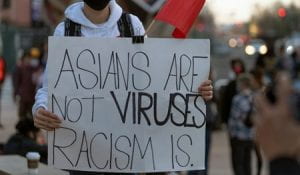
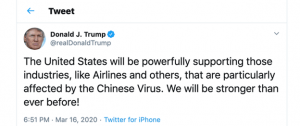
The hatred and bias sparked by the pandemic have not been limited to the real world. Asian Americans have reported the biggest increase in serious incidents of online hate and harassment throughout such a crazy time. Many of them were verbally attacked or insulted by racist and xenophobic slurs merely because they have Asian last names or that they look Asian. According to a new survey shared exclusively with USA TODAY, comparing to last year, there was an 11% increase in sexual harassment, stalking, physical threats, and other incidents reported by Asian Americans, of which many were through online social media platforms. Pursuant to the findings by the Center for the Study of Hate and Extremism at California State University, hate crimes against Asian Americans rose 149% from 2019 to 2020. That is 149% in one year. In addition, an AI-based internet abuse detection organization named L1ght reported a 900% increase on Twitter since the start of this pandemic. This may just be the tip of an iceberg as many of the hate crime incidents may have gone unreported. As you may recall, former President Trump publicly referred the COVID-19 coronavirus as the “Chinese Virus” which led to a record-breaking level of brutal online harassment against Asian Americans. This also gave rise to other similar remarks such as “Kung Flu” or “Wuhan Virus.” Social media users began using hashtags of the like. Just the hashtag “#ChineseVirus” alone has been used over 68,000 times on Instagram.

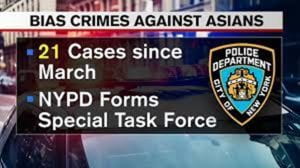
We must not forget that the real world and the cyber world are interconnected. Ideas consumed online can have a significant impact on our offline actions which may lead to violence. Last week, I had the privilege to interview New York Police Department Lieutenant Mike Wang who is in charge of the NYPD’s Asian Hate Crimes Task Force in Brooklyn, he expressed his concerns about the Asian community being attacked, seniors in particular. Lieutenant Wang said during the interview: “It’s just emotionally difficult and heartbreaking. New York Police Department is definitely taking unprecedented measures to combat these crimes. These incidents cannot be overlooked.” Most of these incidents were unprovoked. Some examples include an elderly Thai immigrant who died after being shoved to the ground, a Filipino-American citizen being slashed in the face with a box cutter leaving a big permanent scar on his face, a Chinese lady being slapped and then set on fire, as well as six Asian-Americans being brutally shot to death in a spa one night. Wang indicated that crimes against Asian-Americans in general are nothing new, they have been in existence for quite some time; however, the rage and frustration of the COVID-19 pandemic fueled this fire to an uncontrollable level. Wang encourages citizens to report crimes in general, not just hate crimes, as we need to be more vocal. You can read more about hate crimes and bias on the city’s website.

From verbal harassment to physical assaults, there have been thousands of reported cases since the pandemic started. These are typically hate crimes as offenders believe that the Asian population should be blamed for the spread of the virus. Perhaps people’s daily interactions online play an important role here. Almost everyone uses some sort of social network in our country, the more hatred and bias they see online, the more likely they will exhibit violence in real life. Why? Because people would think such behaviors are acceptable since many others are doing it. Accountability does not seem to be an issue, especially through social channels. At the most, the user’s post would be removed or the account would get suspended. With that being said, it is questionable as to whether the tech companies are doing enough to address these issues? When encountering these hateful behaviors in the cyber world, what are the policies of the social media giants? For instance, Twitter has implemented a policy on hate speech that prohibits accounts whose primary purpose was to incite harm towards others. Twitter does reserve the discretion to remove inappropriate content or suspend users who violated their policy. You can read more about their Hateful Conduct Policy on their website. Other social media platforms such as Facebook, TikTok, and YouTube all have similar policies in place to address hateful behaviors, violent threats, and harassment; however, are they sufficient? According to the CEO of the Anti-Defamation League, online users continue to experience strong hateful comments despite that the social network companies alleged that they are taking things seriously. Facebook and YouTube are still allowing users to use the racially incentive term “Kung Flu” while TikTok has prohibited it. A comics artist Ethan Van Sciver joked about killing Chinese people in one of his videos but later claimed that it was “facetious sarcasm.” YouTube only removed the video stating that it was a violation of its hate speech policy. Like I previously mentioned, the accountability with these social networks is minimal.

Social networks have definitely helped spread the news keeping everyone in the country informed about the horrible incidents that are happening on a regular basis. Other than spreading the virus of hatred and bias online, social networks also raise awareness and promote positivity on the other hand. As Asian hate crimes spike, public figures, and celebrities are taking part to stand against this battle. Allure magazine’s editor-in-chief Michelle Lee and designer Phillip Lim are one of them. They have posted videos on Instagram sharing their very own experiences of racism in an effort to raise awareness. They also used the hashtag #StopAsianHate in their posts. On March 20, 2021, “Killing Eve” star Sandra Oh joined a “Stop Asian Hate” protest in Pittsburgh. She said she is “proud to be Asian” while giving a powerful speech urging people to fight against racism and hatred towards the Asian community. The video of her speech went viral online in just a day and there have been more than ninety-three thousand views on YouTube since.  I have to say that our generation is not afraid to speak up about the hate and injustice we face in our society today. This generation is taking it upon ourselves to prove racism instead of relying on authorities to recognize the threats and implement policy changes. This is how #StopAAPIHate came about. The hashtag stands for “Stop Asian American and Pacific Islander Hate.” Stop AAPI Hate is a nonprofit organization that tracks incidents of hate and discrimination against Asian Americans and Pacific Islanders in the United States. It was recently created as a social media platform to bring awareness, education, and resources to the Asian community and its allies. Stop AAPI Hate also utilized social networks like Instagram to organize support groups, provide aid and pressure those in power to act. The following is a list of influential members of the AAPI community who are vocalizing their concerns and belief: Christine Chiu, “The Bling Empire” star who is also a producer and an entrepreneur; Chriselle Lim, who is a digital influencer, content creator and entrepreneur; Tina Craig, who is the founder and CEO of U Beauty; Daniel Martin, who is the makeup artist and global director of Artistry & Education at Tatcha; Yu Tsai, who is a celebrity and fashion photographer & host; Sarah Lee and Christine Chang, who are the co-founders and co-CEOs of Glow Recipe; Aimee Song, who is an entrepreneur and digital influencer; Samuel Hyun, who is the chairman of the Massachusetts Asian American Commission; Daniel Nguyen who is an actor; Mai Quynh, who is a celebrity makeup artist; Ann McFerran, who is the founder and CEO of Glamnetic; Nadya Okamoto, who is the founder of August; Sharon Pak who is the founder of INH; Sonja Rasula, who is the founder of Unique Markets; as well as Candice Kumai, who is a writer, journalist, director and best-selling author. The list can go on but the purpose of these influential speakers is that taking things to social media is not just about holding people or companies accountable, instead, it is about creating meaningful changes in our society.

The internet is more powerful than we think it is. It is dangerous to allow individuals to attack or harass others, even through the screen. I understand that the social media platforms cannot blatantly censor contents or materials as they see inappropriate on their websites as it may be a violation of the user’s First Amendment rights; however, there has to be more that they can do. Perhaps creating more rigorous policies as an effort to combat hate speech. If we are able to track the user’s identity to his or her real-life credentials, it may curb the tendency of potential offenders or repeated offenders. The question is how do you draw the line between freedom of speech and social order?


Skip to toolbar