When the Internet Moves Faster than the Market: Impacts of Viral Products and Trends in Social Media

Recently, but not shockingly, the internet and its consumers entered a social media-driven craze over a plush monster toy, labubus. The cute, plush monster took over the internet and social media platforms like Tiktok and Instagram, integrating into one of 2025’s latest fashion trends. Created by Kasing Lung in 2015, a labubu is a fictional character that Lung transformed into collectibles by entering into a licensing agreement with Pop Mart in 2019.  

Blackpink’s star Lisa, and celebrities like Rihanna, Dua Lipa, and Kim Kardashian have all contributed to the fame of this doll — making it one of 2025’s most sought after trends. Aside from the various celebrities and influencers that are attributed to the Labubu’s popularity, the collectibles are also sold in what are referred to as “blind boxes”. Essentially, the color and type of the labubu is revealed only after the blind box is bought and received by the buyer – adding to the excitement and anticipation behind finding a rare figure. Labubus were seen all over Instagram and Tiktok, going “viral” as people created memes of them, posted videos unboxing them, and incorporated them into their fashion style.  

The head of licensing at Pop Mart North America, Emily Brough, disclosed that such blind boxes generated more than $419 million in revenue in 2024 — achieving 726.6% year-over-year growth. The generated increased revenue can be significantly attributed to TikTok’s platform, considering as of April 2025, Pop Mart generated $4.8 million in sales on TikTok Shop, a rise of 89% in only one month. The doll rapidly became ultra-desirable on the internet. Although the collection retails at approximately $27 in the U.S., resellers typically double the price on the market, such as $149 on e-bay for a rare Chestnut Cocoa Labubu. Not only do blind boxes play into the fascination behind a Labubu, but resellers also create the concept of exclusivity for the collectibles that ultimately attracts even more consumers. For consumers, Labubus are more than a fashion accessory; owning a Labubu symbolizes being involved and up to date with the current trends, being relatable to other consumers and influencers, and buying something that is highly sought-after.   

With a product like Labubus going viral, it is natural to wonder what exactly the standard is for something to be considered viral.  The Merriam-Webster dictionary describes “viral” as something that is “quickly and widely spread or popularized especially by means of social media”. Although such definition can be broadly applied, the Merriam Webster dictionary explains the simple, core attributes to something that is viral: 1) it is quickly spread, and 2) it is popular. Something can be popular but gain popularity throughout an extended period of time – but what distinguishes a viral product from a typical popular product is the rapid pace the product gains recognition. It could happen in a timeline of a few months, weeks, days, and even overnight. Essentially, a product or trend becomes viral when the promoter of the product creates highly engaging and shareable content that taps into the emotional connection of their audience, who then tap, click, like, comment, and share about the product. The viewer engages more with the post, and the product being mentioned spreads widely throughout the social media universe, quickly earning that viral title.  

Why should the latest trend of Labubus not be considered shocking? The concept of a plush monster being ultra-desirable and extremely sought-after going viral on the internet might not be expected by everyone; but it is important to note that the common ground behind a majority of viral products is the internet. Labubus are only one example of a nearly endless list of trends and viral products social media has boosted. The same effect social media had on Labubus, it also had on Stanley cups in 2023. Viral videos of Stanley cups circulated TikTok, resulting in a significant jump in Stanley’s revenue from approximately $94 million in 2020 to $750 million in 2023. It is clear that social media platforms are an underlying basis for viral products because of the easy access to posts and videos, alongside the individualized algorithms, content creators, celebrities, and e-community that social media platforms like TikTok and Instagram provide. 

It is no secret that celebrities and influencers use social media platforms like Tiktok and Instagram to promote products as part of their brand endorsements. Inevitably, viewers and followers of such celebrities are influenced, resulting in the lifecycle of a trend. The trend typically becomes viral quickly, with much contribution associated to social media algorithms as well, but the product trend cycle is rarely long-term.  

Often, these social media trends that come and go are referred to as “micro-trends”; essentially, micro-trends refer to short-lived trends that gain a high amount of attention in a fairly short period outside of a traditional trend cycle, and ultimately lose public relevance just as fast as they gained it. Micro-trends are advertised through social media as consumer must-haves, creating the ripple effect that consumers feel like they need to buy, buy, buy. The shortened lifecycle of viral products and micro-trends have resulted in a long-term cycle amongst consumers to buy them. It is a full circle of a product going viral, that turns into a micro-trend, leads into overproduction and inevitable overconsumption, creating a higher demand in markets that destabilize economies.  

The issue is that micro-trends are highly associated with the issue of overconsumption that results in companies’ fast production and release of products to keep up with trends.  This issue of overconsumption is accompanied by the rapid and disposable use of micro-trend related products, adding to the broader waste problems that already exist in, for example, the fashion industry. Further, these micro-trends impact the longevity of businesses. The quick turnover of consumers losing interest after these trends hit their highest popularity impacts local businesses from keeping up with the rapid production necessary for micro-trends to exist. Simply put, micro-trends are not sustainable for consumers, businesses, and the environment. For example, fast fashion clothing associated with such micro-trends are commonly received from the Kantamanto Market in Accra, Ghana, where about 40% of the clothing leaves as waste.  

The want and need by consumers to be part of current micro-trends can always be drawn back to social media. Moving away from magazines like Vogue or Elle, social media platforms like TikTok have progressed into the new resource for consumers to find the newest and most popular trend.  Social media algorithms create echo chambers of specific trends by identifying when certain style gains recognition and then feeding users with similar tastes; and from there a micro-trend is born. The algorithm identifies specific trends by recognizing which posts receive the most engagement (what content is viral). The more a post is shared, liked, or commented on, the faster it will spread. These algorithms typically have a faster trend turnaround because users of such platforms have access to almost instant updates of what is trending and what is popular – leading into a loophole of doomscrolling and impulsive spending. Trends are appearing in algorithms at a higher pace and demand than supply chains can respond to. With social media apps and their algorithms, consumers have almost instant access to finding micro-trends and buying into them; and almost instant access creates instant gratification for consumers.  

Algorithms are not the only role in the social media realm that contributes to the viral impact on businesses. Now, social media platforms have also progressed into the new digital storefront, serving as a place to both look and buy. It is simple: open the app, scroll, click, and buy it. E-commerce platforms like Instagram and Tiktok have individualized and specific storefronts to make it easier for their users to buy into the most viral, latest trends, and fast. For example, in 2024, TikTok shop had grown to more than 500,000 United States based sellers within the eight months of launching, and had around 15 million sellers worldwide. E-commerce sites like such can benefit companies that prioritize overconsumption, but they also can promote micro-trends. Algorithms and e-commerce sites can have the ability to strongly affect the economy, where in 2024, economists at the Federal Reserve discovered that inflation-adjusted spending on retail goods increased compared to 2018. Additionally, businesses are impacted as consumers are being drawn away from shopping in-person at small, local, and traditional retailers. The overarching economic impact can be conceptualized by the fact that viral products and micro-trends result in temporary, short-term sales, while creating long-term instability in businesses.  

With the rise of e-commerce in social media, also comes the rise of issues for consumers. Whether in store or online, consumers have the right to safety, to be informed, to choose, to be heard, and to redress. To protect consumers, businesses can provide clear, transparent information about their products; maintain fair transactions; hold themselves accountable for the safety of their products; and protect the privacy of their consumers. Given the large volume of transactions taking place on e-commerce sites, it becomes a challenge to accurately and properly regulate and monitor all transactions to protect against any and all issues that may arise. Consumers are now concerned with where the personal information they share is going, avoiding cyber fraud and scams, and receiving low quality products.

Even further, new issues regarding consumer safeguards such as intellectual property concerns are introduced. For example, with social media’s rapid spread of products and trends, copycat products are becoming increasingly more common. A copycat product is a product that is designed, branded, or packaged to resemble exactly the like of a well-established competitor. Copycat products are created deliberately, to use the established brand’s identity and reputation and market off that. The legal implications associated with copycat products include trademark infringement, unfair competition, and consumer fraud liability. Brands will reproduce viral creator designs without permission and devalue creative labor, and viewers are more susceptible to believing and trusting such copycat products are either associated with the original or of similar quality. However, influencers must be aware that when using social media to share and promote products, and earn that viral title, if the product is a dupe, or a copycat, it could fall under a violation of Section 5(a) of the Federal Trade Commission Act.

In 2020, Amazon filed a lawsuit against two influencers, Kelly Fitzpatrick and Sabrina Kelly-Krejci, alleging they promoted counterfeit products on their social media account. The two influencers were accused of using Instagram, Facebook, and TikTok accounts and working with eleven other individuals/businesses to promote fake luxury items sold on Amazon. The listings were an effort to dupe Amazon’s counterfeit detection tools. Although the lawsuit concluded in a settlement in 2021, and both influencers were barred from marketing, advertising, and promoting products on Amazon, this lawsuit serves as one of the many examples of legal implications that arise from the merge between the power of social media and e-commerce. Specifically for Amazon, their marketplace along with the associated third-party sellers makes up for more than half of their overall e-commerce sales. However, the strong possibility of counterfeits (copycat products) and unsafe products have become a notorious problem extending outside Amazon’s ecosystem and into the entire e-commerce realm.

E-commerce’s part towards overconsumption can be analyzed by looking at the four step process behind purchasing a product: awareness, desire, consideration, and purchase. Because of how quickly products become viral and how fast micro-trends come and go, this four step process for consumers is sped up. Often, consumers will jump from awareness to purchase if the price tag is small enough. Either way, the desire gets created when either the algorithm brings it to the viewer or a content creator references it. Many posts will draw consumers’ attention to e-commerce sites, showing them how easily accessible their shopping can be, by merging social media and e-commerce. Other methods retailers use to draw in consumers are cognitive biases. For example, countdown banners can create an urgency bias amongst consumers that they need the product now; and a social proof bias can push the consumer who is considering to purchase to buy when they see tags highlighting how many people have bought it or how high the ratings are.

Outside the U.S., in February 2025 the EU Commission has commenced an investigation into online company SHEIN’s compliance with EU Consumer laws, urging SHEIN to stop using dark patterns like fake discount and pressure selling. The Commission’s complaint essentially requests SHEIN stops using deceptive techniques such as “confirm shaming” to play into the consumer’s emotions and to provide substantive evidence that shows customer testimonials or messages referring to “low stock” are genuine. The Commission connects SHEIN’s “dark patterns” to the fuel of over-consumption that is environmentally harmful. Such dark patterns play into the cognitive biases that drive consumers to buy. The EU Commission’s efforts into investigating such impacts should be a standard the U.S. takes into account. Although the overwhelming size of the internet and presents issues of controlling its regulation, increasing investigations can be a start in protecting consumers.

Although the progression of e-commerce and social media bring initial yet exciting benefits to consumers,  the intricacies should not be overlooked. It is important to identify when our internet moves faster than our market. Viral products and trends may have a short lifecycle, yet their impacts can have the potential to be longstanding for businesses and consumers. 

Francesca Rocha

November 12, 2025

Privacy Please: Privacy Law, Social Media Regulation and the Evolving Privacy Landscape in the US

Social media regulation is a touchy subject in the United States.  Congress and the White House have proposed, advocated, and voted on various bills, aimed at protecting and guarding people from data misuse and misappropriation, misinformation, harms suffered by children, and for the implications of vast data collection. Some of the most potent concerns about social media stem from use and misuse of information by the platforms- from the method of collection, to notice of collection and use of collected information. Efforts to pass a bill regulating social media have been frustrated, primarily by the First Amendment right to free speech. Congress has thus far failed to enact meaningful regulation on social media platforms.

The way forward may well be through privacy law. Privacy laws give people some right to control their own personhood including their data, right to be left alone, and how and when people see and view them. Privacy laws originated in their current form in the late 1800’s with the impetus being one’s freedom from constant surveillance by paparazzi and reporters, and the right to control your own personal information. As technology mutated, our understanding of privacy rights grew to encompass rights in our likeness, our reputation, and our data. Current US privacy laws do not directly address social media, and a struggle is currently playing between the vast data collection practices of the platforms, immunity for platforms under Section 230, and private rights of privacy for users.

There is very little Federal Privacy law, and that which does exist is narrowly tailored to specific purposes and circumstances in the form of specific bills. Somes states have enacted their own privacy law scheme, California being on the forefront, Virginia, Colorado, Connecticut, and Utah following in its footsteps. In the absence of a comprehensive Federal scheme, privacy law is often judge-made, and offers several private rights of action for a person whose right to be left alone has been invaded in some way. These are tort actions available for one person to bring against another for a violation of their right to privacy.

Privacy Law Introduction

Privacy law policy in the United States is premised on three fundamental personal rights to privacy:

  1. Physical right to privacy- Right to control your own information
  2. Privacy of decisions– such as decisions about sexuality, health, and child-rearing. These are the constitutional rights to privacy. Typically not about information, but about an act that flows from the decision
  3. Proprietary Privacy – the ability to protect your information from being misused by others in a proprietary sense.

Privacy Torts

Privacy law, as it concerns the individual, gives rise to four separate tort causes of action for invasion of privacy:

  1. Intrusion upon Seclusion- Privacy law provides a tort cause of action for intrusion upon seclusion when someone intentionally intrudes upon the reasonable expectation of seclusion of another, physically or otherwise, and the intrusion is objectively highly offensive.
  2. Publication of Private Facts- One gives publicity To a matter concerning the Private life of another that is not of legitimate concern to the public, and the matter publicized would be objectively highly offensive. The first amendment provides a strong defense for publication of truthful matters when they are considered newsworthy.
  3. False Light – One who gives publicity to a matter concerning another that places the other before the public in a false light when The false light in which the other was placed would be objectively highly offensive and the actor had knowledge of or acted in reckless disregard as to the falsity of the publicized matter and the false light in which the other would be placed.
  4. Appropriation of name and likeness- Appropriation of one’s name or likeness to the defendant’s own use or benefit. There is no appropriation when a persona’s picture is used to illustrate a non-commercial, newsworthy article. This is usually commercial in nature but need not be. The appropriation could be of “identity”. It need not be misappropriation of name, it could be the reputation, prestige, social or commercial standing, public interest, or other value on the plaintiff’s likeness.

These private rights of action are currently unavailable for use against social media platforms because of Section 230 of the Decency in Communications Act, which provides broad immunity to online providers for posts on their platforms. Section 230 prevents any of the privacy torts from being raised against social media platforms.

The Federal Trade Commission (FTC) and Social Media

Privacy law can implicate social media platforms when their practices become unfair or deceptive to the public through investigation by the Federal Trade Commission (FTC). The FTC is the only federal agency with both consumer protection and competition jurisdiction in broad sectors of the economy. FTC investigates business practices where those practices are unfair or deceptive. FTC Act 15 U.S.C S 45- Act prohibits “unfair or deceptive acts or practices in or affecting commerce” and grants broad jurisdiction over privacy practices of businesses to the FTC. Trade practice is unfair if it causes or is likely to cause substantial injury to consumers which is not reasonably avoidable by consumers themselves and is not outweighed by countervailing benefits to consumers or competition. A deceptive act or practice is a material representation, omission, or practice that is likely to mislead the consumer acting reasonably in the circumstances, to the consumer’s detriment.

Critically, there is no private right of action in FTC enforcement. The FTC has no ability to enforce fines for S5 violations but can provide injunctive relief. By design, the FTC has very limited rulemaking authority, and looks to consent decrees and procedural, long-lasting relief as an ideal remedy. The FTC pursues several types of misleading or deceptive policy and practices that implicate social media platforms: notice and choice paradigms, broken promises, retroactive policy changes, inadequate notice, and inadequate security measures. Their primary objective is to negotiate a settlement where the company submits to certain measures of control of oversight by the FTC for a certain period of time. Violations of the agreements could yield additional consequences, including steep fines and vulnerability to class action lawsuits.

Relating to social media platforms, the FTC has investigated misleading terms and conditions, and violations of platform’s own policies. In Re Snapchat, the platform claimed that user’s posted information disappeared completely after a certain period of time, however, through third party apps and manipulation of user’s posts off of the platform, posts could be retained. The FTC and Snapchat settled, through a consent decree, to subject Snapchat to FTC oversight for 20 years.

The FTC has also investigated Facebook for violation of its privacy policy. Facebook has been ordered to pay a $5 billion penalty and to submit to new restrictions and a modified corporate structure that will hold the company accountable for the decisions it makes about its users’ privacy to settle FTC charges claiming that they violated a 2012 agreement with the agency.

Unfortunately, none of these measures directly give individuals more power over their own privacy. Nor do these policies and processes give individuals any right to hold platforms responsible for being misled by algorithms using their data, or for intrusion into their privacy by collecting data without allowing an opt-out.

Some of the most harmful social media practices today relate to personal privacy. Some examples include the collection of personal data, the selling and dissemination of data through the use of algorithms designed to subtly manipulate our pocketbooks and tastes, collection and use of data belonging to children, and the design of social media sites to be more addictive- all in service of the goal of commercialization of data.

No current Federal privacy scheme exists. Previous Bills on Privacy have been few and narrowly tailored to relatively specific circumstances and topics like healthcare and medical data protection by HIPPA, protection of data surrounding video rentals as in the Video Privacy Protection Act, and narrow protection for children’s data in Children’s Online Protection Act. All the schemes are outdated and fall short of meeting the immediate need of broad protection of widely collected and broadly utilized data from social media.

Current Bills on Privacy

Upon request from some of the biggest platforms, outcry from the public, and the White House’s request for Federal Privacy regulation, Congress appears poised to act. The 118th Congress has pushed privacy law as a priority in this term by introducing several bills related to social media privacy. There are at least ten Bills currently pending between the House of the Senate addressing a variety of issues and concerns from Children’s data privacy to the minimum age for use and designation of a new agency to monitor some aspects of privacy.

S744The Data Care Act of 2023 aims to protect social media user’s data privacy by imposing fiduciary duties on the platforms. The original iteration of the bill was introduced in 2021 and failed to receive a vote. It was re-introduced in March of 2023 and is currently pending. Under the act, social media platforms would have the duty to reasonably secure user’s data from access, refrain from using the data in a way that could foreseeably “benefit the online service provider to the detriment of the end user” and to prevent disclosure of user’s data unless the party is also bound by these duties. The bill authorizes the FTC and certain state officials to take enforcement actions upon breach of those duties. The states would be permitted to take their own legal action against companies for privacy violations. The bill would also allow the FTC to intervene in the enforcement efforts by imposing fines for violations.

H.R.2701 – Perhaps the most comprehensive piece of legislation on the House floor is the Online Privacy Act. In 2023, the bill was reintroduced by democrat Anna Eshoo after an earlier version on the bill failed to receive a vote and died in Congress. The Online Privacy Act aims to protect users by providing individuals rights relating to the privacy of their personal information. The bill would also provide privacy and security requirements for treatment of personal information. To accomplish this, the bill established a new agency – the Digital Privacy Agency- which would be responsible for enforcement of the rights and requirements. The new individual rights in privacy are broad and include the rights of access, correction, deletion, human review of automated decision, individual autonomy, right to be informed, and right to impermanence, amongst others. This would be the most comprehensive plan to date. The establishment of a new agency with a task specific to administration and enforcement of privacy laws would be incredibly powerful. The creation of this agency would be valuable irrespective of whether this bill is passed.

HR 821– The Social Media Child Protection Act is a sister bill to one by a similar name which originated in the Senate. This bill aims to protect children from the harms of social media by limiting children’s access to it. Under the bill, Social Media platforms are required to verify the age of every user before accessing the platform by submitting a valid identity document or by using another reasonable verification method. A social media platform will be prohibited from allowing users under the age of 16 to access the platform. The bill also requires platforms to establish and maintain reasonable procedures to protect personal data collected from users. The bill affords for a private right of action as well as state and FTC enforcement.

S 1291The Protecting Kids on Social Media Act is similar to its counterpart in the House, with slightly less tenacity. It similarly aims to protect children from social media’s harms. Under the bill, platforms must verify its user’s age, not allow the user to use the service unless their age has been verified, and must limit access to the platform for children under 12. The bill also prohibits retention and use of information collected during the age verification process. Platforms must take reasonable steps to require affirmative consent from the parent or guardian of a minor who is at least 13 years old for the creation of a minor account, and reasonably allow access for the parent to later revoke that consent. The bill also prohibits use of data collected from minors for algorithmic recommendations. The bill would require the Department of Commerce to establish a voluntary program for secure digital age verification for social media platforms. Enforcement would be through the FTC or state action.

S 1409– The Kids Online Safety Act, proposed by Senator Blumenthal of Connecticut, also aims to protect minors from online harms. This bill, as does the Online Safety Bill, establishes fiduciary duties for social media platforms regarding children using their sites. The bill requires that platforms act in the best interest of minors using their services, including mitigating harms that may arise from use, sweeping in online bullying and sexual exploitation. Social media sites would be required to establish and provide access to safeguards such as settings that restrict access to minor’s personal data and granting parents the tools to supervise and monitor minor’s use of the platforms. Critically, the bill establishes a duty for social media platforms to create and maintain research portals for non-commercial purposes to study the effect that corporations like the platforms have on society.

Overall, these bills indicate Congress’s creative thinking and commitment to broad privacy protection for users from social media harms. I believe the establishment of a separate body to govern, other than the FTC which lacks the powers needed to compel compliance, to be a necessary step. Recourse for violations on par with the EU’s new regulatory scheme, mainly fines in the billions, could help.

Many of the bills, for myriad aims, establish new fiduciary duties for the platforms in preventing unauthorized use and harms for children. There is real promise in this scheme- establishing duty of loyalty, diligence and care for one party has a sound basis in many areas of law and would be more easily understood in implementation.

The notion that platforms would need to be vigilant in knowing their content, studying its affects, and reporting those effects may do the most to create a stable future for social media.

The legal responsibility for platforms to police and enforce their policies and terms and conditions is another opportunity to further incentivize platforms. The FTC currently investigates policies that are misleading or unfair, sweeping in the social media sites, but there could be an opportunity to make the platforms legally responsible for enforcing their own policies, regarding age, against hate, and inappropriate content, for example.

What would you like to see considered in Privacy law innovation for social media regulation?

When in Doubt, DISCLOSE it Out!

The sweeping transformation of social media platforms over the past several years has given rise to convenient and cost-effective advertising. Advertisers are now able to market their products or services to consumers (i.e. users) at low cost, right at their fingertips…literally! But convenience comes with a few simple and easy rules. Influencers, such as, athletes, celebrities, and high-profile individuals are trusted by their followers to remain transparent. Doing so does not require anything difficult. In fact, including “Ad” or “#Ad” at the beginning of a post is satisfactory. The question then becomes, who’s making these rules?
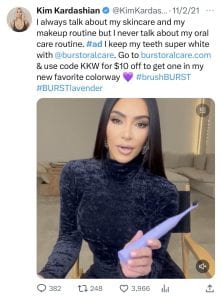
The Federal Trade Commission (FTC) works to stop deceptive or misleading advertising and provides guidance on how to go about doing so. Under the FTC, individuals have a legal obligation to clearly and conspicuously disclose their material connection to the products, services, brands, and/or companies they promote on their feeds. The FTC highlights one objective component to help users identify an endorsement. That is, a statement made by the speaker where their relationship with the advertiser is such that the speaker’s statement can be understood to be sponsored by the advertiser. In other words, if the speaker is acting on behalf of the advertiser, then that statement will be taken as an endorsement and subject to guidelines. Several factors will determine this, such as compensation, free products, and the terms of any agreement. Two basic principles of advertising law apply to all types of advertising in any media. They include 1) a reasonable basis to evidence claims and 2) clear and conspicuous disclosure. Overall, the FTC works to ensure transparent sponsorship in an effort to maintain consumer trust.

The Breakdown—When, How, & What Else

Influencers should disclose when they have a financial, employment, personal, or family relationship with a brand. Financial relationships do not have to be limited to money. If for example, a brand gives you a free product, disclosure is required even if you were not asked to mention it in a post. Similarly, if a user posts from abroad, U.S. law still applies if it is reasonably foreseeable that U.S. consumers will be affected.

When disclosing your material connection to the brand, make sure that disclosure is easy to see and understand. The FTC has previously disapproved of disclosure in places that are remote from the post itself. For instance, users should not have to press “show more” in the comments section to see that the post is actually an endorsement.

Another important aspect advertisers and endorsers should consider when disclosing are making sure not to talk about items they have not yet tried. They should also avoid saying that a product was great when they in fact thought it was not. In addition, individuals should not convey information or produce claims that are unsupported by actual evidence.

However, not everyone who posts about a brand needs to disclose. If you want to post a Sephora haul or a Crumbl Cookie review, that is okay! As long as a company is not giving you products for free or paying you to sponsor them, individuals are free to post at their leisure, without disclosing.

Now that you realize how seamless disclosure is, it may be surprising that people still fail to do so.

Rule Breakers

In Spring 2020 we saw an uptick of social media posts due to the fact that most people abided by stay-at-home orders and turned to social media for entertainment. TikTok is deemed particularly addictive, with users spending substantially more time on it over other apps, such as Instagram and Twitter.

TikTok star Charlie D’Amelio spoke positively about the enhancement drink, Muse in a Q&A post. She never acknowledged that the brand was paying her to sponsor their product and failed to use the platform’s content enabling tool which makes it even easier for users to disclose. D’Amelio is the second most followed account on the platform.

The Teami brand found itself in a similar position when stars like Cardi B and Brittany Renner made unfounded claims that the wellness company made products that resulted in unrealistic health benefits. The FTC instituted a complaint alleging that the company misled consumers to think that their 30-day detox pack would ensure weight loss. A subsequent court order prohibited them from making such unsubstantiated claims.

Still, these influencers hardly got punished, but received a mere ‘slap on the wrist’ for making inadequate disclosures. They were ultimately sent warning letters and received some bad press.

Challenges in Regulation & Recourse

Section 5(a) of the FTC Act is the statute that allows the agency to investigate and prevent unfair methods of competition. It is what gives them the authority to seek relief for consumers. This includes injunctions and restitution and in some cases, civil penalties. However, regulation is challenging because noncompliance is so easy. While endorsers have the ultimate responsibility to disclose their content, advertising companies are urged to implement procedures that make doing so more probable. There are never-ending amounts of content on social media to regulate, making it difficult for entities like the FTC to know when rules are actually being broken.

Users can report undisclosed posts through their social media accounts directly, their state attorneys general office, or to the FTC. Private parties can also bring suit. In 2022, a travel agency group sued a travel influencer for deceptive advertising. The influencer made false claims, such as being the first woman to travel to every country and failed to disclose paid promotions on her Instagram and TikTok accounts. The group seeks to enjoin the influencer from advertising without disclosing and to engage in corrective measures on her remaining posts that violate the FTC’s rules. Social media users are better able to weigh the value of endorsements when they can see the truth behind such posts.

In a world filled with filters, when it comes to advertisements on social media, let’s just keep it real.

Skip to toolbar